Sunday, June 19, 2022

Web content writing

Lecture sessions 

Day 1

Immersive technology is an integration of virtual content with the physical environment in a way that allows the user to engage naturally with the blended reality.  In an immersive experience, the user accepts virtual elements of their environment as part of the whole, potentially becoming less conscious that those elements are not part of physical reality. 

Immersive learning

Immersive learning is a learning method which students being immersed into a virtual dialogue, the feeling of presence is used as an evidence of getting immersed. The virtual dialogue can be created by two ways, the usage of virtual technics, and the narrative like reading a book.

Types

There are two types of immersive experiences: one being when you are actually in a physical environment. The other type of experience is where you are shown around a real or imagined environment via desktop, tablet, mobile or via VR (Virtual Reality) headset.

Problems of traditional learning

Traditional classroom based learning techniques largely rely on auditory and written learning styles. Whether in an educational or work related training space, this has significant and widely recognised limitations. Every learner is unique and this is reflected on how they process and retain information. And for many, providing engaging and interactive content offers a more inclusive and accessible learning experience, especially for those that are predisposed to a visual and kinesthetic style of learning.


Immersive learning is a hugely effective way for many learners to develop their knowledge and skills. It provides artificial, digitally created content and environments that accurately replicates real life scenarios so that new skills and techniques can be learned and perfected. Learners aren’t simply passive spectators; they get to be active participants who directly influence outcomes. And what’s more, it offers a risk-free and safe space where learning can be repeated and success can be accurately measured. It’s practice-based learning where the sky is the limit.

Immersive technologies include:

virtual reality (VR) – a digital environment that replaces the user’s physical surroundings.

     Virtual reality is an artificial environment that is created with software and presented to the user in such a way that the user suspends belief and accepts it as a real environment. On a computer, virtual reality is primarily experienced through two of the five senses: sight and sound.It is a computer-generated simulation of an environment or 3-dimensional image where people can interact in a seemingly real or physical way.

Modern virtual reality headset displays are based on technology developed for smartphones including: gyroscopes and motion sensors for tracking head, body, and hand positions; small HD screens for stereoscopic displays; and small, lightweight and fast computer processors.


Using VR Tech, any learner understands complex scientific concepts with fun and ease, for example, when a student uses Virtual Reality to understand “Respiration System in a human body” the student will understand that while breathing, so many gaseous elements go inside the lungs and how the oxygen is filtered from the other elements and how it will bound with RCB. This RCB containing oxygen penetrates the cell membrane and breaks glucose, to produce water and carbon dioxide. During this process, energy is released, which is captured by the ATP molecule. All these explanations are in 3D & 360° which will help the student to remember it easily and then recall whenever required. The example I have discussed here is just a glimpse of our vast VR content Library.


Virtual Reality is used in education to enhance student engagement with their study. VR creates the real world around us. It can transform the way of education which is provided nowadays. It can be also used in industries, medical, security, military, Anti-terrorism, Traffic accidents awareness, Weather forecasting, etc.


Benefits of Virtual Reality in Education

Increase knowledge area

Active experience rather than just passive information

Helps to understand complex concepts, subjects, or theories

No distractions while the study

Boosts students creativity

Expands learners efficiency to gain knowledge

Increase Interest in boring subjects like science

Improve the understanding level of students

Improve teaching skills in teachers using VR by providing a deep level of knowledge.

Improving memory power by connecting feelings with education.

It takes very little time to understand very complex topics.

Get education as per the book syllabus with its connecting environment and practicals.

Fun, Virtual tour, and existing game-based education.

Improve a Student’s Imagination power.

================================================================


Augmented reality (AR) – digital content that is superimposed over a live stream of the physical environment.


How is augmented reality being used in business?


Today, business and enterprise use cases are the predominant reality applications for AR. Some key examples include:


Design and construction — Arguably the most common and fruitful application for AR today, designers are using augmented reality to see what hypothetical products (or structures) look like in real environments and to make virtual tweaks to existing products without ever laying a hand on them.


How do you design

Recent research has shown that images, colors, music, oversized portions, product novelty, price promotions and celebrities were the most memorable aspects of food advertisements.


Maintenance and repairs — AR technology can guide technicians through the steps of repairing, upgrading, and maintaining a wide range of products, ranging from industrial equipment to entire buildings. AR allows technicians to work on equipment without having to refer to printed manuals or websites, overlaying detailed instructions – often visual – atop the machinery itself.


Training and education — Businesses are using AR technology to provide an immersive experience when training employees, allowing them to more comprehensively visualize new products and concepts. Schools are following suit.

Healthcare — AR technology has made its way into the surgery room, with overlays showing the critical steps of an operation, patients' vital statistics, and more.

Retail — From virtual makeup to virtual changing rooms, businesses are using AR to give retail shoppers a revamped, modernized augmented reality experience when shopping.


Technology — Products like Splunk Augmented Reality bring AR to major utility companies to improve responses during power outages, and gain full visibility into the entirety of their data.


Marketing — AR concepts on packaging, point-of-sale materials, and even billboards give businesses a brand new — and much more memorable — way to interact directly with customers.

What are the components of an augmented reality system?


Augmented reality varies depending on implementation, but the most common components include the following, categorized by hardware and software.


These hardware components comprise the backbone of augmented reality. Some of these components might already be supported if you are engaging in AR with your smartphone (more in the following section):


Processor – Augmented reality requires significant processing power to create the imagery needed and place it in the proper location for it to appear to exist in a real-world environment. Processors may be incorporated in a mobile handset or embedded into a wearable device (more on this below).

Display – In AR, imagery is created and then populated on some form of display. This can take several forms, depending on the specific application. These include:


Mobile handheld device – The smartphone or tablet screen is arguably the most common way in which AR hologram imagery is viewed. A user points his or her phone’s camera at a point of interest, and the live video hologram generated by the camera lens is overlaid with AR information.

Wearable device – Smart glasses such as Google Glass, Vuzix Blade, and Solos Smart Glasses are all designed as standard eyeglasses that also contain a small display only visible to the wearer. The person wearing the augmented reality headset can see the real world by looking straight through the lenses of the goggles, while the embedded display provides an informational overlay. VR headsets are less common in AR environments because they do not allow the wearer to see the real world directly; instead, it has to be recreated in video and displayed on the built-in screen, which is otherwise opaque.

Automotive HUDs – HUDs, or heads-up displays, are systems that use your car’s windshield as a screen. A device projects an image – speed, directions, etc. – from the dashboard upwards onto the windshield. The driver sees the reflection of this imagery as it bounces off the glass like a mirror.

Others — Looking ahead, more futuristic devices like smart contact lenses and systems that can project an image directly onto the retina may become viable.

Camera – As the primary sensor required for AR to function, the camera feeds the live video to the processor, which detects key facets of the environment on which the AR data is overlaid. The camera itself does not process any of the digital information; it merely provides the video feed.

Other sensors – AR is often designed for motion, so additional sensor types are required for operation. These may include spatial sensors, such as accelerometers and digital compasses, which indicate the direction the camera is facing; GPS sensors, which track the user’s location in the world; microphones, which incorporate audio data into the simulation: and LiDaR, which uses lasers to measure exact distance.

Input devices – A user on the move is often not at liberty to type commands into a computer. As such, AR systems have been devised to work with numerous types of input technologies. Foremost is the mobile device touchscreen, providing a natural interaction if a phone or tablet is available. Other options include voice recognition technology, so users can control the system via speech, and gesture recognition systems, which typically translate the motion of the user’s hand into commands.

Several types of software algorithms are needed to enable augmented reality. Broadly, these include:


Image registration – Software that takes a photographic representation of one’s surroundings and uses that information to determine various real-world coordinates and objects within it. Image registration maps the real world and determines what is in the foreground vs. what is in the background, where one object ends and another begins, and points of interest as well as additional information.


3D rendering – With the real world mapped and categorized, the next step is overlaying the augmented reality information on top of it. The 3D renderer creates virtual objects and places them into the appropriate location within the live image. The programming language Augmented Reality Markup Language (ARML) is the current standard for setting the location and appearance of a virtual object.


Content management – Content management is a back-end technology incorporating a system that maintains a database of virtual objects and 3D models.


Interface – Whether it’s a video game or a technical management tool, the interface is the intermediary between the user and the video representation of the augmented reality environment.


Development toolkits – A variety of open source and proprietary technologies are used to give programmers a framework for building AR applications on the platform of their choice.


How does augmented reality work on mobile?


If you encounter an AR application today, it will probably be in the form of a mobile phone app: any smartphone owner has access to hundreds of AR applications on iPhone or Android mobile phones without the need for any additional hardware. All the core software capabilities needed to enable AR are built into the operating system.


In a typical use case, the AR user launches an application on his or her mobile phone or tablet. Most AR apps are fairly simple in design. The user just aims the mobile phone or device at a point of interest and waits for the application to populate the screen with additional context. This could be anything from walking directions to the identity of stars in the sky to dance steps.


=====================================================================


Mixed reality (MR) – an integration of virtual content and the real world environment that enables interaction among elements of both.


Holography – the creation of a 3D image in space that can be explored from all angles.


TelePresence – a form of robotic remote control in which a human operator has a sense of being in another location. The user could, for example, guide the robot through a party or an office, stopping and chatting with people throughout the environment.


Digital twin – a virtual replication of some real-world object that connects to the object for information so that it can display its current status. 


FPV drone flight –  use of an unmanned aerial vehicle (UAV) with a camera that wirelessly transmits video feed to goggles, a headset, a mobile device or another display so that the user has a first-person view (FPV) of the environment where the drone flies. 


================================


A digital learning strategy involves learning by using digital assets such as videos, online courses, blogs, podcasts, articles and so on. In order to stay current in a dynamic workplace, it is important to keep learning all the time. For businesses to survive the digital age, they need to understand why a digital learning strategy is crucial for success.


Having a variety of digital asset types considers all the different ways people prefer to learn. You may like to complete a multi-week online course, while someone else may prefer watching a TED-talk. IBM has found that participants learn 5 times more material in online learning courses using multimedia content than in traditional face to face courses. Online learning caters to the different styles of learners, be they visual, auditory or kinesthetic learners. Adult learners do not like to be lectured to. They want to be engaged with the learning content and even participate in the learning process.


Day 2 Web content writing 

Definition
Types
Tools
Medium

Definition:  Content writing is the process of writing, editing, and publishing content in a digital format. That content can include blog posts, video or podcast scripts, ebooks or whitepapers, press releases, product category descriptions, landing page or social media copy ... and more.

Content writing is the fine-crafted art and structural science of making content for digital media. The different types of content writing examples on the digital front include blogs, scriptwriting for videos, emailers, social media posts, whitepapers, etc. All of these are important for the digital growth of a brand.

What are content writing skills?

Content writing skills are the skills that enable you to write clear, consistent and relevant articles to deliver a captivating experience for the company's target audience. This encourages the audience to visit the company's website for some information. Here are a few content writing skills you may develop to be successful in this field:

Adaptability

Content writers can have their own style and tone for every assignment they write. Depending on the goal of the article, they may format their work to focus on providing relevant information to the audience. For example, if the purpose of the article is to enhance sales, the content may differ from if they were writing for a research blog. The ability to adapt helps writers learn and gain expertise in different styles of writing, which ultimately provides value.

Research

Performing research about the content enables the writers to add credibility to the article and also add value for the reader. You can refer to educational, government and other news outlets to improve the quality of information you share in your content. To maintain your credibility among the readers, it is important to provide relevant, well-researched and truthful content.

Originality

For writers, writing original content is very important regardless of the subject. They can perform their research and then use that knowledge in informative and interesting content for readers. If the websites provide original content, the readers consider it as a reliable and respected source of information.


Search engine optimisation (SEO)

As a writer, if you understand SEO, it can become easy to create content that is easy to find. They may adapt techniques to ensure their article gets a high ranking in the search engines. If the content appears in the top search, there are high chances it may reach the target audience. You can look at the rich snippet and other high-ranked articles on search engines to strengthen the value of your content.

Time management

Having good time-management skills enables you to plan your tasks to ensure articles are delivered in time and with good quality. This includes scheduling time for research, writing and editing. By identifying the hours you require to complete an average project, you can better manage your time to ensure a balanced workload. These skills also include your ability to identify and prioritise projects based on deadlines and their importance. You can speak to your manager about the time you need in order to complete one piece of work and accordingly set the deadlines.

Communication

Communication skills assist you in accurately conveying your message to the intended audience. Delivering clear information to readers is imperative for successful marketing strategies. Whether it is content for storytelling or a call-to-action following a sales pitch, proper communication skills for writers are imperative.

Editing

Effective editing skills are crucial for writers, increasing the value and quality of the content while reducing the number of revisions required. Read your content out loud to find typing errors, grammatical errors, redundancy and overused words. Then make revisions to refine the quality of your content.

Knowledge of social media

By understanding social media platforms, you know where to find story ideas for your content. Studying your company's existing posts helps you determine the content that resonated most with readers. Review your company's social media accounts to gather inspiration for future content to write and predict how well it may perform.

Technical

Having little technical knowledge is important for content writers. They may rely on technical skills such as computer literacy and using word processing and content management systems effectively. The ability to use and implement analytics tools and digital collaboration tools is also helpful to content writers.


What are content writing skills?

Content writing skills are the skills that enable you to write clear, consistent and relevant articles to deliver a captivating experience for the company's target audience. This encourages the audience to visit the company's website for some information. Here are a few content writing skills you may develop to be successful in this field:

Adaptability

Content writers can have their own style and tone for every assignment they write. Depending on the goal of the article, they may format their work to focus on providing relevant information to the audience. For example, if the purpose of the article is to enhance sales, the content may differ from if they were writing for a research blog. The ability to adapt helps writers learn and gain expertise in different styles of writing, which ultimately provides value.

Research

Performing research about the content enables the writers to add credibility to the article and also add value for the reader. You can refer to educational, government and other news outlets to improve the quality of information you share in your content. To maintain your credibility among the readers, it is important to provide relevant, well-researched and truthful content.

Originality

For writers, writing original content is very important regardless of the subject. They can perform their research and then use that knowledge in informative and interesting content for readers. If the websites provide original content, the readers consider it as a reliable and respected source of information.

How to highlight content writing skills

Below are some ways to highlight your writing skills on your resume and during the interview:

1. Include content writing skills on your resume

Make sure your resume talks about relevant content writing skills. You can review the mandatory qualifications mentioned in the job description and understand the content writing skills suitable for this role.

Example: The skills on your resume might look like below:

Technical skills

  • content management software

  • word processing software

  • web data analytics software

  • social media monitoring software

2. Mention content writing skills during the interview

During an interview, discuss your content writing skills similar to the following example:

"In the previous company, I used my organisational and communication skills to deliver high-quality content. In order to write content about the company's social media campaigns of their latest product launch, I collaborated with different teams to understand the idea and goal of the campaigns. This helped me write an appropriate article mentioning details about the purpose of the campaign and its outcome. I also earned praise from the higher management for completing the content in tight timelines and with minimal edits."


Tuesday, May 31, 2022

Statistical counseling

Statistical counseling refers to the technique that gives insight to the client about understanding the pattern, causes and consequences of current  psychological problems.

Activities 
1. Imagine one having very friendly attitude to you and write 10 adjectives related to the person.
2. Imagine one having very unfriendly attitude to you and write 10 adjectives related to the person.
3. Write synonym and antonym.
4. Now design semantic differential scale.
5. Assign data
6. Score
7. Plot the data.
6. Give data feedback to the client.

Wednesday, May 18, 2022

Performance appraisal

Performance appraisal

Essay method
Comparative evaluation
Rating
Forced distribution method
Forced choice method
Graphic rating scale method
Field review method
Checklist
Confidential report
Critical incident method
Management by objectives (MBO)
Behaviorally anchored rating scales (BARS)
Cost accounting method
360-degree appraisal


Essay method
It is a traditional and judgmental approach under which employee is evaluated and a descriptive essay is written on him/her. The essay describes in detail about the strengths, weaknesses, potential, nature, etc.

Essay method helps in collecting a lot of information about the employees as the evaluators are not confined to appraise the employees in rigidly defined criteria. The process is unrestricted and flexible, permitting the employers to emphasize on any issues or traits that they feel relevant.

However, this method is tedious and difficult to manage as it demands more description than other methods of appraisal. The reports being descriptive in nature, it is difficult to compare and contrast them or withdraw any conclusion. Besides, the evaluator must have good writing skills, or else the whole process is distorted.


Comparative evaluation
Comparative evaluation is a technique of appraising employees by comparing and contrasting issues and traits of an employee with another. There are basically two ways to conduct comparative evaluation; they are:

Paired comparison
Under this method, the pairs of employees of same job post or level are formed, following which they are evaluated on the basis of performance of each other. Subjects like skills, experience, team player, behavior, etc. are evaluated by the raters and picks the best performing employee.To be precise, the raters are provided with a bunch of slips, each containing a pair of names of employees. The employee whom raters consider to be the best is given a tick mark and the process is repeated for all pairs. At the end, the employee who succeeds to get the most tick is considered to be the best while the employee getting least ticks is comparatively considered poor.

Paired comparison is a good method for evaluating employee performance. However, it becomes very difficult for companies with large number of employees to form pairs as the pairs are formed by applying the formula:
N (N-1) ÷ 2, where N = No. of employees
For an example, if there are four employees, the number of pairs formed will be six.

Ranking
Ranking is one of the simplest methods of performance appraisal. Under this method, employees are ranked from the best to the worst according to their performance level.The best performing employees are ranked #1 and the least performing one is ranked the last. Based on these rankings, the companies may take any actions, from promotion to termination. Although ranking method of performance appraisal is considered to be an easier approach, it becomes problematic and full of issues when conducted in a large scale. Also, this method of performance appraisal is criticized because it is unsystematic and results are often drawn on the basis of snap judgment.

Rating
Rating is a commonly used traditional method of performance appraisal. Under this approach, an employee is numerically rated from 1 to 10 on various job performance criterions like attendance, attitude, performance, output, sincerity, dependability, initiative, etc.The employee may be rated by his/her superiors, colleagues or even customers, depending upon the nature of job. Scores of all criterions are finally calculated, and results are withdrawn.
Rating method of performance appraisal is commonly used because it is economic in nature and raters do not require to have high skills to use it. Also, it is applicable in almost all types of job and even with large workforce.

Forced distribution method
Employers or raters are found to have tendency to rate their employees near average or above average performing categories. In around late 90s, Tiffen introduced a new method of performance appraisal call forced distribution, in an attempt to eliminate the flaws of the raters. Under this method, raters are forced to divide his employees evenly into certain categories which vary from organization to organization. The categories can be poor, average, good and excellent or percentile based like 10% poor, 40% fairly good, 40% good and 10% excellent. This method is widely applied and has been considered effective in service-driven companies. However, the method also has some drawbacks. They are: It creates false competition between employees. All employees might not fit neatly into a category, leading to their placement in such a category that does not reflect their true image.
Raters may end up placing more visible employees in superior categories and less visible ones in poor category, irrespective of their job performance.

Forced choice method
Forced choice method of performance appraisal was introduced by J.P. Guilford. It is one of the most systematic and reliable approach to evaluate employees accurately. Under this approach, the HR manager, at first, prepares a set of positive as well as negative statements. The statements are then forwarded to the rater, following which the rater indicates which of the given statements suits the employee. Once the rater finishes evaluating all employees, the report is sent to the HR manager for final assessment. Some examples of positive and negative statements are Positive statements
Communicates well with superiors. Plays active role in meetings and other office events. Negative statements Consistently over-promises and under-delivers.Isn’t punctual, often comes late to the office.Each of such statements, both positive as well as negative, carries certain score set by the HR manager, which is not even revealed to the rater. It makes the process more objective. The scores are at last summed up and conclusion is withdrawn. The employees with high scores are ranked at the top while least scoring employees are ranked at the bottom.Some critics have, however, noted that this method is time consuming and it is very challenging to construct pertinent evaluative statements.

Graphic rating scale method
Graphic rating scale is one of the oldest and commonly used methods of performance appraisal. Under this approach, the employees are evaluated on the basis of various job performance criterions, such that each criterion is categorically divided into poor, fairly poor, fairly good, good and excellent. Also, these criterions carry certain score weight. The rater ticks the category that best describes the employee and finally the score is totaled.

Field review method
Field review method of performance appraisal is conducted by the rater who does not belong to the employees’ department. The rater is someone from the corporate, especially from HR department.Use of this technique to evaluate employees’ performance is helpful in completely eliminating issues that arise due to rater’s biasedness. However, this method is not widely used because of the drawbacks. They are The rater is not familiar with employees, making it impossible for him to observe their actual behavior.The rater might feel aggrieved in cases when employees try to clarify any matter.

Checklist
Checklist method is another of the easiest methods of appraising employee’s performance. Under this method, a checklist is prepared by the HR manager and is forwarded to the rater. The checklist may include list of questions (depicting behavior and job performance of employee) and the rater has to answer them in just ‘YES’ or ‘NO’ form.


Friday, May 6, 2022

Pro-environmental attitude

CHAPTER I: INTRODUCTION


In the period we live in, called as Anthropological era by some researchers (Crutzen, 2003; Steffen et al., 2007), many environmental problems such as air pollution, depletion of potable water resources, loss of biodiversity, and notably, climate changes have occurred (Gautier, 2014; 

Intergovernmental Panel on Climate Change [IPCC], 2013; Sonnenfeld & Mol, 2002; World Wide Fund for Nature, 2018). Environmental pressure started with the establishment of agricultural societies by human beings, reached high levels in the industrial era and has continued to increase today. Despite the ability of the environment to sustain itself, human behaviours disrupt the natural environment and become a threat to environmental sustainability. Besides major factors such as population growth, depletion of resources and pollution, daily behaviours such as smoking, inefficient recycling habits, unfriendly attitudes towards the environment are increasing factors leading to the destruction of the natural resources.


 Environmental pollution and Climate change has led to the rapid deterioration of various ecosystems with far reaching consequences for the living organisms residing within them. The repercussions of pollution and climate change on biological organisms, as well as on particularly susceptible communities, are an important source of global scientific concern. Our current generation has changed the ecosystem faster and more exhaustively than any other generation before, therefore, a significant part of the environmental problems experienced today is human-induced (Çoban, 2014; Williams & Cary, 2002). The solution is based on people’s awareness regarding the root of the problem (Rickinson, 2001) and behavioural change for a sustainable future. 


Environmental education is the best way to raise awareness of people about the environment. It is the process of learning necessary information about the environment, forming positive attitudes toward the environment, developing the right behaviours, and creating conscious societies that act with lifelong awareness in every point of life (Erol & Gezer, 2006; Gülersoy et al., 2020). Well-planned environmental education that includes practical activities plays an important role in providing individuals with exemplary behaviours toward the environment.


Environmental Psychology

Environmental psychology emerged as a subdiscipline of psychological science. This field defines the term environment broadly, encompassing natural environments, social settings, built environments, learning environments, and informational environments. It is an interdisciplinary field that focuses on the interplay between individuals and their surroundings.

 It covers all aspects of human behaviour and mental life in relation to the biophysical environment, whether considered as ambient environmental factors (e.g., noise, temperature, lighting), specific behaviour settings (e.g., schools, offices, hospitals), the basic infrastructure of everyday life (e.g., energy and transportation systems), or in a broader sense, with regard to landscape and the relationship between built and natural aspects of human environments. Human behaviour and mental life include, but are not limited to, perception and cognition, emotion, stress and mental fatigue, decision making, and social interactions, as manifest in covert and overt behaviour. In short, environmental psychology is concerned with the facts of bi-directional influence in people-environment interactions; it considers how the socio physical environment influences people and how people influence the environment (Gärling, 2014).

Environmental psychology was not fully recognized as its own field until the late 1960s when scientists began to question the tie between human behaviour and our natural and built environments. Since its conception, the field has been committed to the development of a discipline that is both value oriented and problem oriented, prioritising research aimed at solving complex environmental problems in the pursuit of individual well-being within a larger society (Proshansky 1987). When solving problems involving human-environment interactions, whether global or local, one must have a model of human nature that predicts the environmental conditions under which humans will respond well. This model can help design, manage, protect and/or restore environments that enhance reasonable behaviour, predict the likely outcomes when these conditions are not met, and diagnose problem situations. This field develops such a model of human nature while retaining a broad and inherently multidisciplinary focus.

The importance of environmental factors in psychiatric research is gaining increased attention due to the various detrimental effects unfavourable environmental conditions may give rise to. They may be the genesis of various neurological and psychological disorders and induce congenital defects and cause impairments in neurodevelopment as well as leading to the manifestation of a number of psychophysical symptoms. Climate change has been predicted to affect both community-wellbeing and physical health which would have associated ramifications on mental health as well (Berry et al., 2010).

In the existing literature, climate change is found to have three types of psychological effects. Firstly, an increase in natural calamities and extreme fluctuations in weather conditions precipitated by climate change has been found to take a toll on mental wellness. Secondly, vulnerable communities and places, especially those in low – income countries, would be adversely impacted by climate change as found by Berry et al., (2010). This may be due to their reduced accessibility to the resources that promote mental health and wellbeing.

Lastly, the emerging phenomenon of ‘eco anxiety’ is also being triggered by climate change. Eco anxiety is closely associated with fear and worry (Panu, 2020). It causes emotional distress and feelings of apprehension about the future and may leave individuals experiencing a myriad of other negative feelings such as sadness, helplessness, frustration or anger.

Knowing environmental issues enables individuals to predict the results of their activities. For example, an individual who knows ecological relationships in nature can predict what kind of impact the other related species, and perhaps the entire ecosystem, could face if any species becomes extinct and can, therefore, shape their behaviour accordingly. However, many studies emphasise that positive feelings and attitudes are more important than providing information to individuals in environmental education. Pooley and O'Connor (2000) and Iozzi (1989) have stated that environmental attitudes are directly related to behaviours and knowledge lags behind them. For this reason, the concept of attitude toward the environment becomes important as one of the determining factors of behaviour.


Attitude

Attitudes that are formed as a result of individuals’ perceptions and prepares the ground for their behaviours (Akande, 2009; Kağıtçıbaşı, 2010) are the positive and negative emotions that are organised based on any subject, concept, object, phenomenon or event, motivation and information related to that subject (Güney, 2000; Kağıtçıbaşı, 2010; TezbaÅŸaran, 1996). Ajzen and Fishbein (1977) state that attitudes consist of four elements: action, goal-oriented action, action-oriented content, and time. 

Throughout the history of psychology, the notion of attitude has played an essential role

in the explanation of behaviour. Attitude research has been popular beginning in the

1900s. One of the main reasons for this, as described by Wicker (1969), is that theorists

have believed and have seen a real connection between attitudes and behaviour. Gordon

Allport (1935), an early pioneer in attitude research, characterised the concept of attitude

as distinctive and indispensable to social psychology.


The word ‘attitude’, stems from the Latin word “Aptus” it has on one hand the

significance of ‘fitness’ or connotes a subjective or mental state of ‘preparation for

action’. The term ‘attitude’ was introduced in social psychology as an explanatory device

in an attempt to understand human behaviour." (Fishbein & Ajzen, 1975, p.336).


The word attitude has been defined in various ways by different scientists. Allport (1935), defined attitude as “a mental and neural state of readiness, organised through experience, exerting a directive or dynamic influence upon an individual's response to all objects and situations with which it is related". Krech, D., & Crutchfield, R. S. (1948), defined attitude as, “an enduring organisation of motivational, emotional, perceptual and cognitive processes with respect to some aspect of the individual's world”. Thurstone and Chave (1929) define attitude as, "The sum total of man's inclinations and feelings, prejudices or biases, preconceived notions, ideas, fears, threats and convictions about any specific topic. A.L. Edwards (1969) defines attitude as "the degree of positive or negative effect associated with some psychological object."


Attitudes possess certain characteristics: valence (degree of positive or negative feeling about an attitude object that predicts what attitude scales normally measure), centrality (the extent to which an attitude is a part of a person's self-concept and reflects the individual’s identity), interrelatedness (the extent to which an attitude is related to a person's other attitudes), stability (an attitude’s resistance to change) and salience (a person's conscious awareness of the attitude).


An attitude is a latent construct mentally attached to a concrete or abstract object (otherwise known as an “attitude object” - a person, place, entity, or idea). Attitudes have been said to be made up of three components: cognitive (consisting of the person's thought process, perceptions and beliefs, and evaluations about the attitude object), conative (consisting the behavioural intentions and actions regarding the attitudinal object) and affective (provides an emotional or feeling aspect to the attitude which results in an object being liked or disliked). (Breckler, 1984).


Attitudes are often confused with other constructs, such as values, beliefs, opinions, personality dispositions, personal norms and behaviour. Although all these components relate to the three attitude components to some extent, they also differ in subtle but important ways. 

Values are the moral principles or moral ethics or culturally bound standards of behaviour. On the other hand, attitudes are the opinions or stances about a certain subject matter or a person.

A belief is defined as an enduring organisation of perceptions and cognitions about some

aspects of the individual's world. Whereas, attitude refers to a person's favourable or unfavourable evaluation of an object, beliefs represent the information a person has about the said object. Behaviour is the dynamic resultant of motivational, emotional, perceptual and learning processes operating simultaneously. While attitude involves the mind's predisposition to certain ideas, values, people, systems, institutions; behaviour relates to the actual expression of feelings, action or inaction orally or/and through body language. Personality is the dynamic organisation within the individual of those psycho-physical systems that determine his unique adjustment to his environment. Personality traits differ from attitudes in that, like values, they are not focused on a particular object, are not necessarily evaluative and are not easily changeable (Ajzen, 2005).


Erten (2005) defines environmental attitude as "individuals' emotions such as fear, anxiety, anger caused by environmental problems, their value judgments about the environment, and their attitudes and thoughts that can be positive or negative, such as taking part in solving environmental problems." In this regard, attitudes toward the environment directly affect the perspectives and preferences of individuals regarding environmental events. Environmental attitudes can also be defined as concern for the environment or caring about environmental issues (sometimes referred to as pro-environmental attitudes). Pro – environmental attitudes has been defined by Giffords & Sussman (2012) as the consideration and concern displayed by an individual towards the natural environment and involves them caring about issues plaguing the environment. 

Wednesday, April 27, 2022

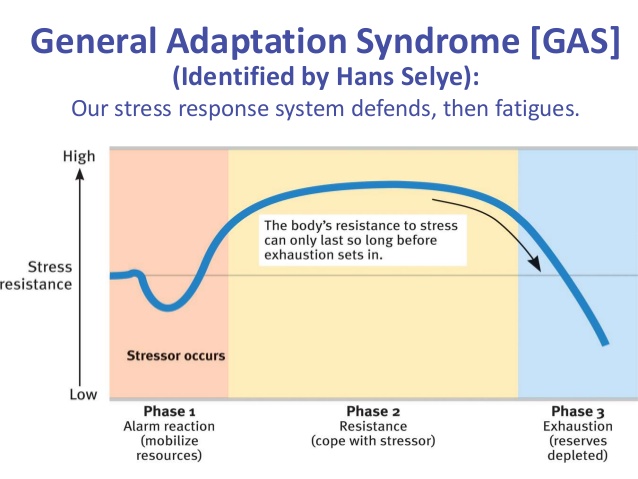
General Adaptive Syndrome


 General adaptation syndrome (GAS) is a description of the process of how your body responds to stress. The phenomenon was first identified by a scientist named Hans Selye in 1946.


Stages of General Adaptation Syndrome 

General adaptation syndrome occurs in three stages. In each of these stages, your body reacts in different ways. The physiological changes your body goes through during this process can have a long-term negative effect.

Below are the three stages of GAS explained.2

Alarm Reaction Stage 

This is the first stage of general adaptation syndrome. During this stage, your body sends a distress signal to your brain. Your brain responds by sending a message to the body releasing hormones called glucocorticoids and adrenaline; these are also known as your “fight or flight” hormones. During the alarm reaction stage, you’ll also experience elevated blood pressure and heart rate levels. 

Resistance Stage 

The resistance stage occurs after the reaction stage. During this stage, your body tries to thwart the changes that occurred during the reaction stage employing the parasympathetic nervous system. It typically occurs when whatever was triggering your stress has stopped.

If you remain stressed, the reaction stage will persist. In the resistance stage, your body begins to lower your blood pressure and heart rate. It also reduces the amount of adrenaline and cortisol being produced.

Your body, however, remains on alert in this stage and can easily switch back to the reaction stage if the stressor persists. At this stage, your body is simply trying to recover from the shock of the alarm reaction stage. 

Exhaustion Stage 

Stress puts your body through a toll, and the exhaustion stage occurs after prolonged stress. You experience this stage after your body has gone through an extended period of stress. Here, even if the stressor persists, your body is too depleted to continue to combat it. This is the riskiest stage of general adaptation syndrome, as you are most prone to developing health conditions here.

Signs of General Adaptation Syndrome 

During each of the three stages of general adaptation syndrome, your body exhibits different signs. 

Alarm Reaction Stage 

During the reaction stage, your body reacts in the following ways. 

  • Elevated blood pressure 
  • Heart rate quickens 
  • Pupils dilate 
  • Senses become heightened 
  • Skin flushes 

Resistance Stage 

If there is persistent stress, in the resistance stage your body may exhibit the following:

Exhaustion Stage 

The exhaustion stage leaves your body feeling unequipped to ward off stress. You are susceptible to developing stress-related conditions at this stage. Your body might exhibit the following symptoms: 

  • Anxiety 
  • Cognitive difficulties
  • Depression 
  • Fatigue
  • Insomnia

Identifying General Adaptation Syndrome 

Hans Selye, a researcher, and scientist came up with the concept of general adaptation syndrome. He used the term to define the physical changes the body goes through when it's stressed. He discovered this while experimenting on lab rats.

In his study, he noticed that the rats went through specific psychological changes during the experiment when exposed to physical stressors like extreme temperatures.3

However, many other things could also trigger stress and they include: 

  • Losing a loved one 
  • Getting fired from a job 
  • Going through a breakup 
  • Having a demanding job 

Stress is responsible for general adaptation syndrome occurring. Although Hans Selye has only identified physical stressors in his initial experiment, any type of stress could cause GAS to occur.

During the first stage of general adaptation syndrome, your body goes into “fight or flight” mode. This mode is essential to protect yourself during a stressful or dangerous situation. You get a burst of energy that helps you think more critically and help effectively tackle the stressful situation at hand.

Complications Associated With General Adaptation Syndrome 

While general adaptation syndrome isn’t a condition that needs to be diagnosed or treated, it’s primarily a description of what happens to your body under stress. Being in a stressful state for an extended period can cause medical complications. You could develop a host of physical and medical conditions. Some of the most common conditions that have been linked to experiencing prolonged levels of either physical or mental stress include:4

  • Hypertension 
  • Mood and anxiety disorders 
  • Heart disease 
  • Immune suppression

Managing General Adaptation Syndrome 

Finding ways to cope with prolonged stress will help prevent your body from going into the exhaustion stage. The exhaustion stage is the riskiest stage of general adaptation syndrome. During this stage, your immune system is weakened, and you are at an increased risk of developing health conditions such as high blood pressure, strokes, and heart diseases.4 

There’s no one way to manage stress. You’ll have to identify your stressors and attempt to get rid of them or minimize them. A few tested and tried techniques people have used to manage stress for centuries include: 

  • Eat a balanced diet: What you eat plays a significant role in how you feel. If you fuel your body with unhealthy foods, it will be ill-equipped to handle stressful situations. 
  • Exercise more regularly: Research shows that exercising regularly can help to reduce your stress levels.5If you are new to exercising or don’t like to go to the gym, taking daily walks around your neighborhood is a great way to start moving. 
  • Practice breathing exercises: Taking deep and controlled breaths when in a stressful situation can help you relax and cope better. 
  • Identify your triggers: The first step to managing your stress is identifying what triggers it in the first place. This could be a highly demanding job, communicating with an estranged relative, or going to a specific location. Identifying what triggers your stress can help you get rid of them. 
  • Write down your feelings: Journaling is an often overlooked way of dealing with stress. Writing down your feelings and coming to terms with them can help you cope better. 

Drugs and Behaviour

 ===========================================================================

DRUGS AND BEHAVIOUR
===========================================================================
Drug refers to any substance, other than food, that influences motor, sensory, cognitive, or other bodily processes. Drugs generally are administered for experimental, diagnostic, or treatment purposes but also tend to be used recreationally to achieve particular effects.

In case of anxiety and depression, psychotropic drugs are generally used. 
Psychotropics are a broad category of drugs that treat many different conditions. They work by adjusting levels of brain chemicals, or neurotransmitters, like dopamine, gamma aminobutyric acid (GABA), norepinephrine, and serotonin. There are five major classes of legal psychotropic medications: anti-anxiety agents.

Dopamin
 Dopamine is a type of monoamine neurotransmitter. It's made in your brain and acts as a chemical messenger, communicating messages between nerve cells in your brain and your brain and the rest of your body. Dopamine also acts as a hormone. Dopamine is responsible for allowing you to feel pleasure, satisfaction and motivation. When you feel good that you have achieved something, it's because you have a surge of dopamine in the brain. Dopamine is responsible for allowing you to feel pleasure, satisfaction and motivation. When you feel good that you have achieved something, it’s because you have a surge of dopamine in the brain.

It’s possible, however, that you start craving more of this dopamine ‘reward’, which is caused by many pleasant experiences, including eating nice food, having sex, winning a game and earning money. Alcohol and many illegal drugs cause a surge of dopamine too, which is partly why people get addicted to them.

Dopamine also has a role to play in controlling memory, mood, sleep, learning, concentration and body movements.

Activities that make you feel good will also raise dopamine. These include exercisingmeditatinghaving a massage and getting enough sleep. Thinking about your achievements and all the good things in your life can also help.

GABA

Gamma aminobutyric acid (GABA) is a naturally occurring amino acid that works as a neurotransmitter in your brain. Neurotransmitters function as chemical messengers. GABA is considered an inhibitory neurotransmitter because it blocks, or inhibits, certain brain signals and decreases activity in your nervous system.

It is observed that both drug addiction, as well as alcoholism, lead to a person's irresponsible behavior and their increased inclination to take unnecessary risks. Also, while under the influence of drugs and alcohol, people may fall into criminal traps and often commit acts that are socially or legally unacceptable.

The main categories are:
stimulants (e.g. cocaine)
depressants (e.g. alcohol)
opium-related painkillers (e.g. heroin)
hallucinogens (e.g. LSD)

Drugs work in body in a variety of ways. They can interfere with microorganisms (germs) that invade your body, destroy abnormal cells that cause cancer, replace deficient substances (such as hormones or vitamins), or change the way that cells work in your body.

Drug abuse is a serious factor in memory loss and a lack of concentration, which can affect aspects of your life you may not have considered. Drugs can make it hard for you to study, improve your skills at work, learn and retain new concepts, and even pay attention to what's happening around you.

Alcohol, tobacco, or drug use have long been recognized as a cause of memory loss.

Smoking harms memory by reducing the amount of oxygen that gets to the brain. Studies have shown that people who smoke find it more difficult to put faces with names than do nonsmokers. Illegal drugs can change chemicals in the brain that can make it hard to recall memories.


Alcohol and Sleep
Alcohol often is thought of as a sedative or calming drug. While alcohol may induce sleep, the quality of sleep is often fragmented during the second half of the sleep period. Alcohol increases the number of times you awaken in the later half of the night, when the alcohol's relaxing effect wears off. It prevents you from getting the deep sleep and REM sleep you need, because alcohol keeps you in the lighter stages of sleep. With continued consumption just before bedtime, alcohol's sleep-inducing effect may decrease as its disruptive effects continue or increase. The sleep disruption resulting from alcohol use may lead to daytime fatigue and sleepiness. The elderly are at particular risk for alcohol-related sleep disorders, because they achieve higher levels of alcohol in the blood and brain than do younger adults after consuming an equivalent dose. Bedtime alcohol consumption among older adults may lead to unsteadiness if walking is attempted during the night, with increased risk of falls and injuries.

Drugs and Academic achievement
Teens who abuse drugs have lower grades, a higher rate of absence from school and other activities, and an increased potential for dropping out of school. Most people who use drugs regularly don’t consistently do well in school. male student with book over face sitting against wall Studies show that marijuana, for example, affects your attention, memory, and ability to learn. Its effects can last for days or weeks after the drug wears off. So, if you are smoking marijuana daily, you are not functioning at your best. Students who smoke marijuana tend to get lower grades and are more likely to drop out of high school.